
Based in Minnetonka, Minnesota
Flames FP is based in Minnetonka, Minnesota, about three and a half hours north; Des Moines relationships run virtually. This page describes the Des Moines service area, not a separate Des Moines branch.
Financial advisor serving Des Moines
Flames Financial Planning is based in Minnetonka, Minnesota and works with Des Moines households through a virtual planning relationship. Fixed quarterly memberships coordinate investments, taxes, retirement, and estate guidance without an AUM fee.
Direct answer
Compare each advisor’s registration, fiduciary role, total annualized cost in dollars, the services included, and who you actually meet with. Flames Financial Planning is based in Minnetonka—not at a Des Moines office—and serves Des Moines households virtually. Memberships cost $150, $900, or $1,650 per quarter, with no AUM fee and no annual commitment.
A truthful local relationship
A location page should tell you who is actually available, where the firm sits, and how the relationship works day to day.
Flames FP is based in Minnetonka, Minnesota, about three and a half hours north; Des Moines relationships run virtually. This page describes the Des Moines service area, not a separate Des Moines branch.
Meetings, document sharing, dashboard access, and ongoing planning all happen remotely, so where you live does not limit the advice you get.
Check any advisor’s registration, services, disciplinary history, and fee disclosures before you sign. That applies to this firm as much as any other.
Iowa planning context
Tax rules are set by the state, not the city, and they change which decisions are worth the most. The full Iowa picture, with sources, is on the Iowa page. How those rules bear on withdrawal order, Roth-conversion timing and Medicare premiums is set out in the retirement tax planning overview.
Iowa taxes income at a flat 3.8% and, from 2023, excludes retirement income entirely for taxpayers 55 and older: pensions, IRA and 401(k) distributions and Roth-conversion income, with no dollar cap. Social Security is not taxed and the inheritance tax is gone for deaths from 2025. For a Des Moines household the state layer disappears from the conversion decision in the year one spouse turns 55.
For tax years from 2023, retirement income is excluded from Iowa taxable income for taxpayers who are 55 or older on December 31, disabled, or a surviving spouse. The Department's qualifying list includes traditional and Roth IRA distributions, 401(k) and pension income including IPERS, and Roth-conversion income, with no dollar limit. Social Security benefits are not taxed.
Senate File 619 (2021) phased out Iowa's inheritance tax, which no longer applies to deaths on or after January 1, 2025. Iowa has had no separate estate tax since 2005. Only the federal exclusion applies.
Des Moines is an insurance and financial-services capital, home to Principal Financial Group's headquarters and large operations of Wells Fargo and Nationwide, alongside the Hy-Vee and Casey's headquarters, John Deere's Ankeny works and state government. Public-company restricted stock and defined-benefit pensions are common, as are employee-owners of the region's privately held companies with retirement plans of their own.
Brackets, thresholds, and retirement-income rules are revised regularly. The figures above are for tax year 2026. Treat them as a starting point and confirm the current year before making a decision on them.
Federal and state, together
At 3.8% the state layer is small for working households and disappears for retirees over 55, so the federal deduction cap rarely binds and the plan is almost entirely federal: brackets, Medicare tiers and the taxation of Social Security.
For tax year 2026 the federal deduction for state and local taxes is capped at $40,400, shrinking above $500,000 of modified adjusted gross income to a floor of $10,000. IRS, Instructions for Schedule A (2025), line 5e.
Worth doing here
Things that are worth doing in Iowa that would not be worth doing, or would work differently, somewhere else.
Because Roth-conversion income is on the Department's list of excluded retirement income, an Iowa resident who is 55 or older on December 31 of the conversion year pays no Iowa tax on the conversion, however large. Someone under 55 pays 3.8% on it, so a household approaching 55 has a reason to schedule conversions into the year of the birthday or later.
Each Iowa taxpayer may deduct contributions of up to $5,800 per beneficiary for 2025 to ISave 529 or the IAdvisor 529 plan, so a couple can deduct up to $11,600 per child or grandchild. Contributions made up to the Iowa filing deadline count for the prior year. The limit is indexed; the 2026 figure had not been published when this was written.
A retired farmer who is 55 or older, has materially participated in farming for ten years and has held the land for ten years may elect to exclude farm lease income from Iowa tax, and a separate election excludes capital gain on the sale of farm real property. Both are elections with conditions and interact with the general retirement exclusion.
The first meeting
A discovery meeting is a conversation, not a pitch. For households here it tends to get to these three things.
Roth conversions from the year of the 55th birthday, when Iowa stops taxing them, and how much bracket room the federal side allows.
Restricted stock and a pension at an insurance or financial employer: elections, vesting and concentration.
A retirement-income map in which Iowa takes nothing after 55, so the plan is entirely federal.
Who this fits
The common thread is a household with enough complexity that the decisions interact, and enough assets that a percentage fee gets expensive.
See how the planning relationship works for this situation, what is included, and what it costs.
See how the planning relationship works for this situation, what is included, and what it costs.
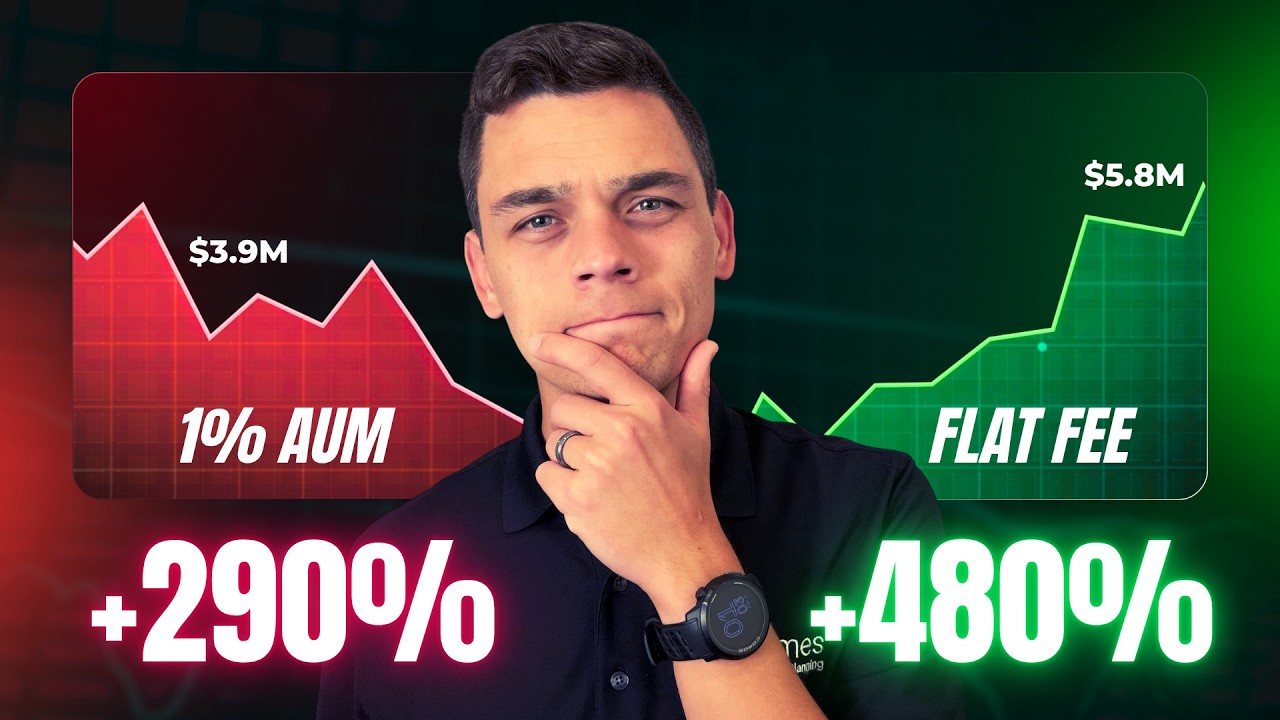
Run your own numbers before talking to anyone, including this firm. The calculator converts a percentage into the dollars it actually costs over time.
Watch and learn
Start with three videos selected for this page, then use the controls to explore every published Flames FP video guide.
Videos 1–3 of 14












Common questions
No. Flames Financial Planning is based in Minnetonka, Minnesota, and serves Des Moines households through a virtual planning relationship. This page describes the service area and does not claim a Des Moines office.
Yes. Des Moines households can meet by video, share documents securely, use the financial dashboard, and receive ongoing planning without travelling. Flames FP serves clients nationwide where permitted.
Flames Access is $150 per quarter ($600 annualized), Planning is $900 per quarter ($3600 annualized), and Premier is $1650 per quarter ($6600 annualized). Memberships are billed quarterly in advance with no annual commitment.
No. The advisory fee is a flat quarterly amount tied to the planning work, not a percentage of the portfolio, so it does not increase as investments grow.
Compare the total annual cost in dollars rather than percentages, exactly what is included at that price, whether the advisor is a fiduciary and fee-only, and who you actually meet with. Then verify the firm's registration and disciplinary history on the SEC's adviser search.
Yes. State tax treatment shapes withdrawal order, Roth-conversion timing, and where investments are best held. Planning includes tax guidance and review of a completed return; Premier adds tax projections and preparation and filing through an independent tax partner. The Iowa rules themselves are set out on the Iowa page.
Next step
A discovery meeting covers your situation, your current advisor arrangement if you have one, and whether a fixed quarterly membership is a better fit than what you are paying now.