
Flames Financial Dashboard
Free Financial Goal Planner
Build goals for emergency funds, retirement, child savings, mortgage payoff, auto payoff, other debt payoff, and major purchases.
Direct answer
What Financial Goals Can You Build in the Dashboard?
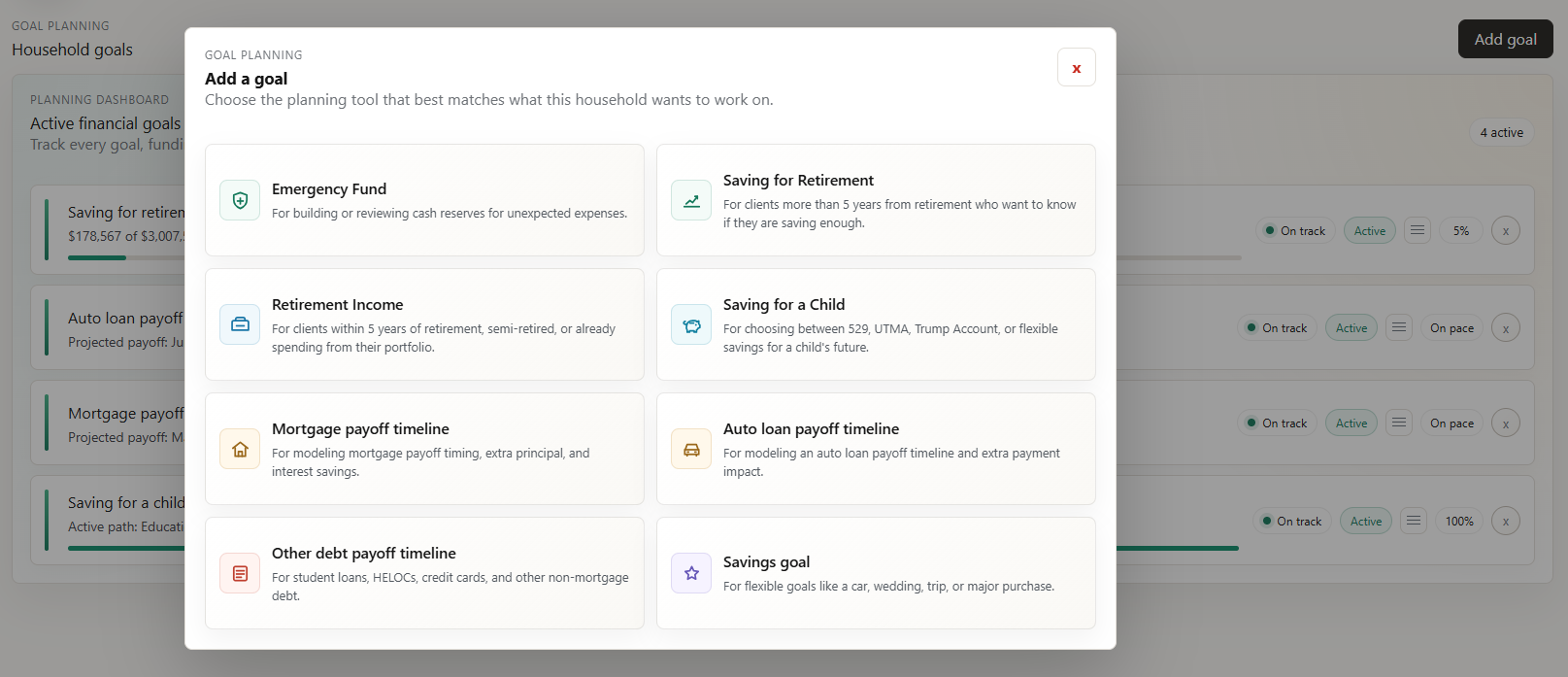
The dashboard supports emergency fund, saving for retirement, retirement income, saving for a child, mortgage payoff, auto loan payoff, other debt payoff, and flexible savings goals.
The right tool depends on the question you are trying to answer: Do I have enough cash? Am I saving enough? Can my portfolio support retirement income? Should I pay extra toward debt? How much should I save for a future purchase?
Goal menu
Choose the Planning Tool That Matches the Question
Each goal type is designed around a practical financial question, not just a generic progress bar.
Goal options
- Emergency Fund
- Saving for Retirement
- Retirement Income
- Saving for a Child
- Mortgage payoff timeline
- Auto loan payoff timeline
- Other debt payoff timeline
- Savings goal
Accounts can feed goals
Accounts from net worth can be assigned to goals. For example, retirement accounts can support retirement goals, a 529 can support an education goal, and a mortgage can power a mortgage payoff timeline.
Budgeting can feed goals
Retirement savings and other goal savings from the budgeting page can be assigned to goals so the dashboard knows what dollars are already planned for future progress.
Emergency fund targets
Emergency fund goals use monthly fixed expenses, target months, and extra buffer to estimate how much cash should be set aside.
Debt payoff decisions
Debt payoff goals compare balance, interest rate, minimum payment, extra payment, payoff timing, and interest saved.
Status language
What Does On Track Mean?
Progress is calculated differently by tool, but the core idea is consistent: compare what is assigned or projected against what is needed.
The accounts, savings, timeline, and assumptions point toward the goal being funded or on pace.
The current path may need more savings, more time, lower spending, different assumptions, or advisor review.
The goal exists, but key inputs or assignments may still be missing.
Tool examples
What Each Goal Tool Helps Answer
Emergency fund
How much cash should I keep? The target is based on monthly fixed expenses, the number of months you want to cover, and any extra buffer.
Saving for retirement
Am I saving enough? The dashboard can use current assets, ongoing contributions, employer additions, investment return, inflation, taxes, spending goals, outside income, legacy goals, and optional advisor fee assumptions.
Retirement income
Can my portfolio support retirement spending? The tool can model spending needs, outside income, tax assumptions, inflation, withdrawal strategy, long-term care assumptions, large purchases, advisor fee assumptions, and portfolio return.
Saving for a child
How should I think about education and long-term child savings? The dashboard can compare education-focused savings, flexible savings, and long-term child savings paths.
Debt payoff
Should I pay extra? Payoff tools use balance, interest rate, current payment, extra payment, one-time principal payments, and payoff timing to estimate payoff date and interest saved.
Flexible savings goal
How much should I save for a future purchase? The tool compares target amount, current assigned savings, target date, and required monthly savings.
How do I set financial goals for my family?
Start with the goals that protect the household first: emergency fund, high-interest debt, retirement savings, insurance review, child savings, and near-term cash needs. Then add larger goals such as home projects, education, mortgage payoff, or major purchases.
What financial goals should I prioritize first?
Prioritize goals that reduce household risk or keep long-term compounding on track: emergency savings, high-interest debt, employer retirement match, basic insurance protection, retirement contributions, and then flexible savings goals.
What financial goals should a young family track first?
A young family should usually start with emergency fund, high-interest debt, retirement savings, life and disability insurance review, child savings, and near-term cash goals before adding more complex planning targets.
How can I track financial goals in one place?
Use the dashboard to assign accounts, planned savings, target dates, balances, and payoff details to each goal so emergency fund, retirement, child savings, debt payoff, and flexible savings goals are visible together.
The Flames Financial Dashboard is an educational planning tool. It is not financial, tax, legal, or investment advice. Goal projections are estimates based on the information entered and assumptions selected. Review major decisions with a qualified professional before acting.
Common questions
Financial Goal Planner FAQ
What financial goals can I build in the Flames Financial Dashboard?
The dashboard supports emergency fund, saving for retirement, retirement income, saving for a child, mortgage payoff, auto loan payoff, other debt payoff, and flexible savings goals.
How can I track financial goals like retirement, debt payoff, emergency fund, and child savings?
Use the dashboard to assign accounts, planned savings, target dates, balances, and payoff details to each goal so emergency fund, retirement, child savings, debt payoff, and flexible savings goals are visible together.
What does on track mean in a financial goal?
On track means the current accounts, savings, timeline, and assumptions appear sufficient for the selected goal. Off track means the dashboard estimates a gap. In progress means the goal exists but needs more setup.
Can accounts from net worth feed financial goals?
Yes. Accounts from the net worth page can be assigned to goals, and savings from the budgeting page can also be assigned to goals.